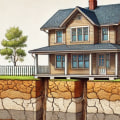
In the realm of foundation design, understanding the concept of deep foundations is crucial for ensuring the stability and longevity of structures. Unlike shallow foundations, which are typically used for lighter loads and stable soil conditions, deep foundations are employed when surface soils cannot support the weight of a building or when additional depth is required to reach more stable soil layers. This necessity arises in various scenarios, such as in areas with high water tables, expansive soils, or heavy loads from skyscrapers and bridges. Deep foundations serve as a vital component in modern construction, providing the necessary support to withstand environmental forces and load-bearing requirements. They transfer the load of a structure deep into the ground, minimizing settlement and enhancing overall structural integrity.
As urban development continues to rise, particularly in densely populated areas, the importance of effective foundation design becomes even more pronounced. Engineers and architects must carefully consider the type of deep foundation that best suits their project’s specific needs. This article will delve into the various types of deep foundations, exploring their unique characteristics, advantages, and applications. By understanding these different types, construction professionals can make informed decisions that not only meet engineering standards but also contribute to sustainable building practices. Whether you are a seasoned engineer or a curious homeowner, grasping the fundamentals of deep foundations will enhance your appreciation for the complexities involved in foundation design.
What are Deep Foundations?
Deep foundations are a crucial aspect of foundation design, particularly in construction projects where surface soil conditions are inadequate to support the loads imposed by structures.Unlike shallow foundations, which transfer loads to the earth close to the surface, deep foundations extend deeper into the ground, reaching more stable soil or bedrock.
Characteristics of Deep Foundations
- Depth: Deep foundations typically reach depths greater than 10 feet, depending on the load requirements and soil conditions.
- Load Distribution: They distribute structural loads over a larger area of soil or rock, reducing the risk of settlement.
- Types: Common types include piles, drilled shafts, and caissons, each suited for specific site conditions and load requirements.
- Installation Methods: Techniques such as driving, boring, or excavating are used to install deep foundations, which can be tailored to the project’s needs.
- The surface soil is weak or compressible, making it unable to support heavy loads.
- The structure is tall or has significant lateral loads, such as wind or seismic forces.
- There is a need to minimize settlement and ensure stability over time.
- Enhanced Stability: By anchoring structures into more stable layers of soil or rock, deep foundations provide greater resistance to settlement and lateral forces.
- Reduced Risk of Failure: They mitigate risks associated with poor surface conditions, ensuring that buildings remain safe and functional over their lifespan.
- Flexibility in Design: Deep foundations allow for innovative architectural designs that may not be feasible with shallow foundations due to site constraints.
Types of Deep Foundations
Deep foundations are essential in construction projects where surface soils are inadequate to support the loads of structures. Understanding the different types of deep foundations is crucial for effective foundation design. Here are some common types:- Pile Foundations: These consist of long, slender columns driven into the ground to transfer loads to deeper, more stable soil layers. Piles can be made from various materials, including concrete, steel, or timber.
They are particularly useful in areas with weak or compressible soils.
- Drilled Shafts: Also known as caissons, drilled shafts are large-diameter holes drilled into the ground and filled with concrete. They provide excellent load-bearing capacity and are often used for bridges and tall buildings.
- Socketed Piles: These piles extend into bedrock or a strong stratum, providing additional stability. Socketed piles are ideal for sites with varying soil conditions, as they anchor the structure firmly.
- Micro Piles: These are small-diameter piles that can be installed in limited access areas. They are often used for underpinning existing structures or in seismic retrofitting due to their ability to handle high loads.
- Sheet Piling: This method involves driving interlocking sheets of steel or concrete into the ground to create a barrier against soil movement and water infiltration.
Sheet piles are commonly used in waterfront construction and excavation support.
Piles: A Common Type of Deep Foundation
Pile foundations are a crucial component of foundation design, particularly in areas where soil conditions are not suitable for traditional shallow foundations. These deep foundations transfer the load of a structure to deeper, more stable soil layers or bedrock, ensuring stability and longevity.There are several types of piles used in construction, each with unique characteristics and applications:- Concrete Piles: These piles are made from reinforced concrete and are known for their strength and durability. They can be precast or cast-in-situ, making them versatile for various construction needs.
- Steel Piles: Steel piles are often used in heavy-load applications due to their high load-bearing capacity.
They can be driven into the ground or used as drilled shafts, providing excellent resistance to lateral forces.
- Timber Piles: Although less common today, timber piles are still used in certain applications, particularly in marine environments. They are cost-effective and can be treated to resist decay and insect damage.
Caissons: Another Type of Deep Foundation
Caissons are a specialized type of deep foundation that provide robust support for structures, particularly in challenging soil conditions.They are typically large, hollow cylinders made of concrete or steel, which are sunk into the ground to reach stable soil or bedrock. The construction of caisson foundations involves several methods, each suited to different site conditions and project requirements.
Construction Methods
There are primarily two methods for constructing caissons:- Open Caissons: These are excavated from the top down, allowing workers to dig out the soil inside the caisson until they reach the desired depth. This method is often used in areas where the soil is relatively stable.
- Closed Caissons: These are prefabricated and then sunk into the ground. They have a watertight seal at the bottom, which allows for excavation underwater.
Closed caissons are ideal for sites with high water tables or where soil conditions are less predictable.
When to Use Caisson Foundations
Caisson foundations are preferred over other types of deep foundations in several scenarios:- High Load Requirements: When a structure requires significant load-bearing capacity, caissons can distribute weight effectively across a larger area.
- Poor Soil Conditions: In areas with weak or unstable soil, caissons can reach deeper, more stable layers, ensuring structural integrity.
- Waterfront Construction: For projects near water bodies, such as bridges or piers, caissons provide a reliable foundation that can withstand water-related challenges.
Drilled Shafts: A Versatile Deep Foundation Option
Drilled shafts, also known as drilled pier foundations, are a popular choice in foundation design due to their versatility and strength. These deep foundations are constructed by drilling a hole into the ground and then filling it with concrete, often reinforced with steel. This method allows for the creation of robust foundations that can support heavy loads, making them ideal for various applications.One of the primary advantages of drilled shafts is their ability to reach deeper soil layers that provide better load-bearing capacity.This is particularly beneficial in areas where surface soils are weak or unstable. By extending the foundation into more competent strata, drilled shafts can effectively transfer loads from structures to the ground, minimizing settlement and enhancing stability.Additionally, drilled shafts can be installed in a variety of soil conditions, including rocky or sandy terrains, which makes them suitable for diverse construction projects. Their adaptability allows engineers to design foundations that meet specific site requirements without compromising structural integrity.
- Cost-Effectiveness: While the initial installation may be higher than other foundation types, the long-term benefits often outweigh these costs due to reduced maintenance and repair needs.
- Reduced Vibration: The installation process generates less vibration compared to driven piles, making them ideal for urban areas where nearby structures must be protected.
- Environmental Considerations: Drilled shafts typically require less excavation and can minimize soil disturbance, making them a more environmentally friendly option.
Soil-Structure Interaction in Deep Foundations
Understanding soil-structure interaction is crucial for the effective design and performance of deep foundations.The behavior of deep foundations is significantly influenced by the properties of the surrounding soil, which can vary widely in terms of composition, density, and moisture content. These variations can lead to different loading responses and settlement behaviors, making it essential for engineers to consider these factors during foundation design.One of the primary aspects of soil-structure interaction is how the soil transfers loads from the structure to the ground. This transfer is not merely a straightforward process; it involves complex interactions that can affect both the stability and integrity of the foundation. For instance, when a load is applied to a deep foundation, the surrounding soil may compress or shift, which can lead to differential settlement if not properly accounted for.
- Soil Type: Different soil types exhibit varying degrees of strength and compressibility.
Cohesive soils, like clay, may behave differently under load compared to granular soils, such as sand.
- Soil Layering: The presence of multiple soil layers can complicate load distribution. Engineers must analyze how these layers interact with each other and with the foundation.
- Moisture Content: Changes in moisture levels can alter soil properties significantly, impacting its load-bearing capacity and overall behavior.
Common Applications of Deep Foundations
Deep foundations are essential in various construction scenarios, particularly when surface soils are inadequate to support the loads of a structure.Understanding the applications of deep foundations can help engineers and architects make informed decisions during the foundation design process.Here are some common applications where deep foundations are necessary:
- High-Rise Buildings: In urban areas, skyscrapers require deep foundations to ensure stability and support their significant weight. Piling systems, such as bored piles or driven piles, are often used to transfer loads to deeper, more stable soil layers.
- Bridges: The construction of bridges over water bodies or unstable ground necessitates deep foundations. These structures often rely on caissons or pile foundations to anchor them securely.
- Heavy Industrial Facilities: Factories and warehouses that house heavy machinery require robust foundations. Deep foundations help distribute the load evenly and prevent settlement issues.
- Marine Structures: Offshore platforms and docks must withstand harsh marine conditions.
Deep foundations, such as marine piles, provide the necessary support in these challenging environments.
- Retaining Walls: In areas with significant elevation changes, retaining walls may need deep foundations to resist lateral earth pressures and ensure stability.
- The load-bearing capacity of surface soils is insufficient.
- The structure is located in seismic zones where stability is critical.
- The project involves large-scale constructions, such as stadiums or convention centers.
FAQs about Deep Foundations
When it comes to foundation design, deep foundations often raise several questions. Here are some of the most frequently asked questions about deep foundations:What is a deep foundation?
A deep foundation is a type of foundation that transfers building loads to deeper, more stable soil layers or bedrock. This is essential in areas where surface soils are weak or unstable, ensuring the structure's stability and longevity.What are the common types of deep foundations?
- Piles: Long, slender columns driven into the ground to reach stable soil or rock.
They can be made of concrete, steel, or timber.
- Caissons: Large, hollow structures that are excavated and filled with concrete. They are typically used for heavy loads and can be constructed above or below water.
- Drilled shafts: Concrete columns that are drilled into the ground and filled with concrete. They provide excellent load-bearing capacity and are often used in seismic areas.
Why are deep foundations necessary?
Deep foundations are necessary when the surface soil cannot support the weight of a structure. They help prevent issues such as settlement, tilting, or even structural failure by distributing loads to more competent soil layers.How do I know if my project needs a deep foundation?
The need for a deep foundation is typically determined through a geotechnical investigation.This assessment evaluates soil conditions, load requirements, and environmental factors to recommend the most suitable foundation type.
What factors influence the cost of deep foundations?
The cost of deep foundations can vary based on several factors:- Soil conditions: Poor soil conditions may require more extensive excavation or specialized techniques.
- Depth required: The deeper the foundation needs to go, the higher the costs associated with materials and labor.
- Type of foundation: Different types of deep foundations have varying costs based on materials and installation methods.
Conclusion: Key Takeaways on Deep Foundations and Foundation Design
In summary, understanding the various types of deep foundations is crucial for effective foundation design. Each type serves a specific purpose and is suited to different soil conditions and structural requirements. By recognizing the strengths and limitations of each foundation type, engineers and architects can make informed decisions that enhance the stability and longevity of structures.Key Types of Deep Foundations
- Pile Foundations: These are long, slender columns driven deep into the ground to transfer loads to deeper, more stable soil layers. They are particularly useful in areas with weak surface soils.
- Caisson Foundations: Also known as drilled shafts, caissons are large-diameter concrete cylinders that are excavated and filled with concrete.
They provide excellent load-bearing capacity and are often used in bridge construction.
- Socketed Foundations: These involve embedding a portion of the foundation into bedrock, providing enhanced stability against lateral forces. They are ideal for structures in seismic zones.