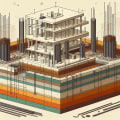
Foundation design is a critical aspect of civil engineering that ensures the stability and longevity of structures. It involves the careful planning and analysis of how buildings interact with the ground beneath them. A well-designed foundation not only supports the weight of the structure but also mitigates risks associated with soil movement, water drainage, and environmental factors. The importance of foundation design cannot be overstated, as it serves as the backbone of any construction project, influencing safety, durability, and overall performance. There are various types of foundations used in modern engineering, each tailored to specific soil conditions and structural requirements.
Shallow foundations, such as spread footings and mat foundations, are commonly used for lighter structures, while deep foundations like piles and caissons are essential for heavier buildings or those situated on unstable soil. Understanding these different types is crucial for engineers to select the most appropriate foundation system that meets both safety standards and project specifications. As we delve deeper into the role of computer software in foundation design, it becomes evident that technology has revolutionized this field. Advanced software tools enable engineers to simulate various scenarios, analyze soil behavior, and optimize designs with unprecedented accuracy. This integration of technology not only enhances efficiency but also significantly reduces the risk of errors in the design process.
By leveraging these tools, engineers can ensure that their foundation designs are not only effective but also innovative, paving the way for safer and more resilient structures in our ever-evolving built environment.
The Evolution of Foundation Design Techniques
The history of foundation design is a fascinating journey that reflects the evolution of engineering practices and materials. In ancient times, builders relied on simple techniques, such as using large stones or compacted earth to create stable bases for structures. The Egyptians, for instance, utilized mud bricks and limestone to construct the pyramids, demonstrating an early understanding of load distribution and soil interaction.As civilizations advanced, so did the methods of foundation design. The Romans introduced innovations like concrete, which allowed for more durable and complex structures.They developed techniques such as deep foundations and pile driving, which laid the groundwork for modern practices. However, these traditional methods often relied heavily on empirical knowledge and experience rather than scientific principles.In the 19th and early 20th centuries, the advent of engineering science brought about significant changes in foundation design. The introduction of soil mechanics as a discipline allowed engineers to analyze soil behavior under various loads more accurately. This period saw the emergence of standardized practices and guidelines, which improved safety and efficiency in construction.Today, modern techniques in foundation design leverage advanced technology and software tools that enhance precision and reliability.
Computer-aided design (CAD) software enables engineers to create detailed models that simulate real-world conditions, allowing for better visualization and analysis of potential issues before construction begins. Additionally, finite element analysis (FEA) software provides insights into how different materials will perform under stress, leading to optimized designs that are both cost-effective and safe.The transition from traditional methods to modern practices underscores the necessity of software in contemporary foundation design. As projects become increasingly complex and the demand for sustainability grows, the role of technology in ensuring robust and efficient foundation solutions is more critical than ever.
Role of Computer Software in Foundation Design
In the realm of foundation design, computer software plays a pivotal role in enhancing both the efficiency and accuracy of the design process. Various software applications have been developed to assist engineers and architects in creating robust foundation systems that can withstand environmental stresses and loads.Key Software Applications
- AutoCAD: Widely used for drafting and designing, AutoCAD allows engineers to create detailed 2D and 3D models of foundation layouts.
Its precision tools help in visualizing the design before actual construction begins.
- STAAD. Pro: This structural analysis and design software is essential for evaluating the stability of foundation systems. It provides advanced analysis capabilities, including load calculations and material optimization.
- PLAXIS: Specifically designed for geotechnical engineering, PLAXIS enables users to simulate soil-structure interaction, which is crucial for understanding how foundations will behave under various conditions.
- SAFE: This software specializes in designing concrete slabs and foundations. It streamlines the process by integrating analysis and design, ensuring that all components work together seamlessly.
Furthermore, these applications often include built-in compliance checks with local building codes, ensuring that designs meet regulatory standards without extensive manual verification.Moreover, the use of computer software minimizes human error, which is critical in foundation design where inaccuracies can lead to catastrophic failures. With advanced modeling capabilities, engineers can visualize potential issues before they arise, allowing for proactive adjustments to be made.In conclusion, the role of computer software in foundation design cannot be overstated. By leveraging these powerful tools, professionals can achieve higher levels of precision and efficiency, ultimately leading to safer and more reliable structures.
Key Software Tools for Foundation Design
In the realm of foundation design, various software tools have emerged to assist engineers in creating safe and efficient structures. These tools not only streamline the design process but also enhance accuracy and compliance with industry standards.Below, we explore some of the most popular software options available for foundation design.
- AutoCAD: Widely recognized for its drafting capabilities, AutoCAD is essential for creating detailed foundation plans. Its user-friendly interface allows engineers to visualize designs in 2D and 3D, making it easier to identify potential issues before construction begins.
- STAAD. Pro: This structural analysis and design software is favored for its comprehensive capabilities in analyzing various types of structures, including foundations. It offers advanced features such as load calculations and seismic analysis, ensuring that designs meet safety regulations.
- PLAXIS: Specifically designed for geotechnical engineering, PLAXIS excels in analyzing soil-structure interaction. Its ability to simulate complex soil behavior makes it invaluable for foundation design, particularly in challenging ground conditions.
- SAFE: A specialized tool for designing concrete slabs and foundations, SAFE integrates analysis and design processes seamlessly.
It provides detailed reports and drawings, which help engineers ensure that their designs are both efficient and compliant with codes.
Benefits of Using Software in Foundation Design
The integration of computer software in foundation design has revolutionized the engineering landscape, offering numerous benefits that enhance the overall design process.One of the most significant advantages is improved accuracy. Traditional methods often rely on manual calculations and estimations, which can lead to errors. Software tools utilize advanced algorithms and data analysis techniques to ensure precise calculations, reducing the risk of costly mistakes.Another key benefit is efficiency. With software, engineers can quickly model various scenarios and analyze different design options.
This rapid iteration allows for more creative solutions and faster decision-making. For instance, software can simulate how different materials and designs will perform under various conditions, enabling engineers to optimize their designs before construction begins.Moreover, the use of software in foundation design contributes to cost-effectiveness. By streamlining the design process and minimizing errors, projects can be completed more quickly and within budget. Additionally, accurate modeling helps in predicting material needs and reducing waste, further lowering costs.
The ability to visualize designs in 3D also aids in better communication with stakeholders, ensuring that everyone is aligned on project goals.In summary, the benefits of using software in foundation design are manifold. From enhanced accuracy and efficiency to significant cost savings, these tools empower engineers to deliver high-quality designs that meet modern construction demands. As technology continues to evolve, embracing these advancements will be crucial for staying competitive in the field.
Challenges and Limitations of Software in Foundation Design
While computer software has revolutionized foundation design, it is not without its challenges and limitations. Understanding these issues is crucial for engineers and designers who rely on technology to ensure the safety and stability of structures.Challenges in Foundation Design Software
One of the primary challenges is the complexity of soil behavior.Soil is a heterogeneous material, and its properties can vary significantly over short distances. Many software programs simplify these variations, which can lead to inaccurate predictions of foundation performance. Additionally, the user interface of some software can be daunting for new users, requiring extensive training to navigate effectively.
Limitations of Technology
Another limitation is the dependence on input data. The accuracy of foundation design software heavily relies on the quality of the data provided.Inaccurate or incomplete data can result in flawed designs, potentially leading to structural failures. Furthermore, many software solutions are not fully integrated with other engineering disciplines, which can create gaps in communication and collaboration.
Overcoming Obstacles
To overcome these challenges, engineers should prioritize continuous education and training in the latest software tools. Regularly updating software and utilizing advanced features can also enhance accuracy. Collaborating with geotechnical experts during the data collection phase can improve input quality, ensuring that designs are based on reliable information.By acknowledging these challenges and actively seeking solutions, professionals can leverage technology effectively while minimizing risks associated with foundation design.
Future Trends in Foundation Design Software
As the field of foundation design continues to evolve, several emerging trends and innovations in engineering software are shaping the future of this critical discipline. Professionals in the industry must stay informed about these advancements to enhance their design processes and improve project outcomes.One significant trend is the integration of Artificial Intelligence (AI) and Machine Learning (ML)BIM (Building Information Modeling) in foundation design.BIM allows for a collaborative approach where all stakeholders can visualize the project in a 3D environment. This not only improves communication among team members but also helps identify potential issues early in the design phase, ultimately saving time and resources.The use of cloud-based software is also gaining traction. This technology enables real-time collaboration among engineers, architects, and contractors, regardless of their physical location. With cloud-based solutions, teams can access up-to-date project information, share insights instantly, and streamline workflows, which is crucial for complex foundation projects.Moreover, advancements in geotechnical software are enhancing the accuracy of subsurface investigations.
Tools that utilize advanced algorithms can provide detailed analyses of soil conditions, allowing engineers to tailor their foundation designs to specific site characteristics. This precision minimizes risks associated with unexpected ground conditions during construction.Lastly, sustainability is becoming a focal point in foundation design software. New tools are being developed to assess the environmental impact of various foundation options, helping engineers choose solutions that are not only structurally sound but also eco-friendly.In conclusion, staying abreast of these future trends in foundation design technology is essential for professionals aiming to maintain a competitive edge in the industry. By embracing innovations such as AI, BIM, cloud-based solutions, advanced geotechnical analysis, and sustainability assessments, engineers can significantly enhance their foundation design practices.
FAQs About Computer Software in Foundation Design
As the field of foundation design evolves, many users have questions about the role of computer software in this critical aspect of engineering.Here are some frequently asked questions:
- What types of software are commonly used in foundation design?
Various software tools are available, including geotechnical analysis programs, structural modeling software, and finite element analysis (FEA) tools. Popular options include PLAXIS, GeoStudio, and SAP2000, each offering unique features tailored to different aspects of foundation design. - How does software improve the accuracy of foundation design?
Computer software enhances accuracy by allowing engineers to simulate various loading conditions and soil behaviors. This capability helps in predicting potential issues before construction begins, ultimately leading to safer and more reliable foundations. - Can foundation design software accommodate local building codes?
Yes, many modern software solutions are equipped with databases that include local building codes and regulations. This feature ensures that designs comply with regional standards, reducing the risk of legal complications during construction. - What are common user concerns regarding foundation design software?
Users often express concerns about the learning curve associated with new software, data accuracy, and the cost of licenses.Additionally, some engineers worry about over-reliance on software without sufficient understanding of underlying principles.
- Is training necessary for effective use of foundation design software?
While some intuitive programs may require minimal training, comprehensive understanding typically necessitates formal training or tutorials. This investment in education can significantly enhance the effectiveness of the software in real-world applications.
Conclusion: The Integral Role of Software in Modern Foundation Design
In conclusion, the role of computer software in modern foundation design is not just significant; it is transformative. As we have explored throughout this article, the integration of advanced software tools has revolutionized the way engineers approach foundation projects, enhancing both efficiency and accuracy. One of the most critical aspects of this transformation is the ability of software to perform complex calculations and simulations that would be nearly impossible to execute manually. This capability allows engineers to analyze various soil conditions, load factors, and environmental impacts with remarkable precision.Consequently, the risk of structural failure is minimized, leading to safer and more reliable foundations. Moreover, modern software solutions facilitate collaboration among multidisciplinary teams. By providing a centralized platform for data sharing and communication, these tools ensure that all stakeholders—from architects to geotechnical engineers—are aligned throughout the design process. This collaborative approach not only streamlines workflows but also fosters innovation in foundation design.Additionally, the use of software in foundation design supports sustainability efforts. With features that allow for the assessment of material efficiency and environmental impact, engineers can make informed decisions that contribute to greener construction practices. As we look to the future, it is clear that the evolution of computer software will continue to shape the landscape of foundation design.
Embracing these technological advancements will be essential for professionals aiming to meet the challenges of modern construction while ensuring safety, efficiency, and sustainability.